
Foot Reflexology Chart Complete Guide
You need the Foot Reflexology Chart if you want to find the Foot Reflexology Points properly. This therapy is a form of acupressure developed in America.
The chart is there to help regulate your blood circulation and the immune system in the body.
There are different types of reflexology, from foot, hand, and face reflexology to ear reflexology. Foot Reflexology is the easiest one to get your head around.
Learn the main acupressure points and you can treat yourself. This guide covers the primary reflexology areas on the foot: the sole, the outside of the foot, the toes, and the inside points.
Massaging or stimulating these pressure points can help ease the discomfort that comes with various pains.
Basic Foot Reflexology Chart
The basic foot reflexology chart below shows the areas of the whole body and the organs connected with each area of the foot.

Once you know these spots on your foot, you’ll know which pressure points to use for specific body organs.
The chart covers the whole body. Just remember this: your right foot goes with the right side of the body, and the left foot works the left side.
When you massage the toes, you’re treating your head and neck. The inside of both feet works the spine.
The dark area underneath your toes is the one to massage to heal the chest.
For the waistline, apply pressure to the thinnest part of the foot. The stomach is on the high side of the waistline. You’ll find the intestine on the underside, and the pelvis at the bottom of your foot.
So to treat the stomach, apply pressure on the left foot.
Foot Reflexology Sole Chart
The Foot Reflexology Sole Chart is simple to learn, and it’s the best chart if you’re new to this. The diagram lists all the body organs linked to the sole area.
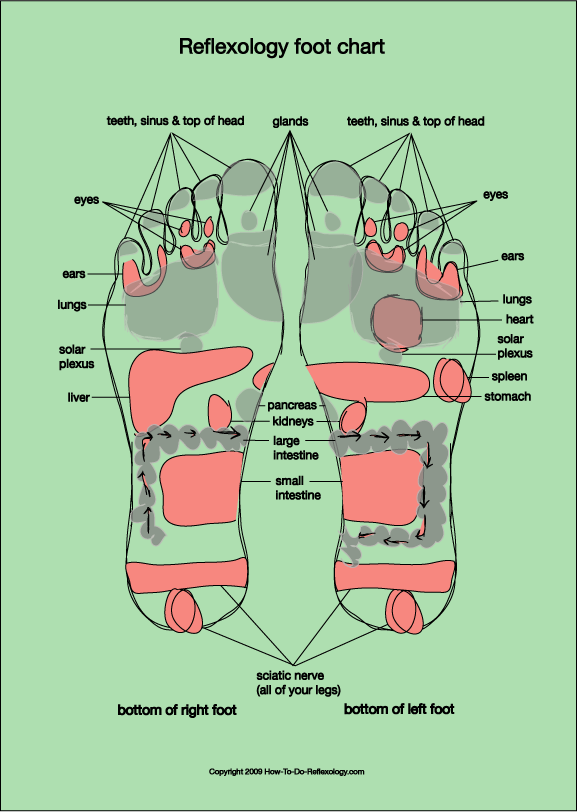
The chart helps you work on specific pressure points to relieve tension and pain in particular organs. Pick the organ, find the spot.
The massage pressure points in the illustration are on both feet. You can use them to treat eye strain, pain in the eyes, tired eyes, or any eye-related problem.
The eye regions are on your second and third toes, below. To relieve pain, apply pressure with your hand to those specific spots. Hold the point for a couple of seconds, then let go. Repeat the procedure a few times.
Remember to do this on both feet, one by one. That’s just one example. As you can see, there are other acupressure points you can use to treat the ear, lungs, heart, spleen, and more.
Use the same method for all the reflexology spots mentioned, just as you did for the eyes.
Foot Reflexology Outside Chart
The chart shows various parts of the body on the outer side of the foot. With the Foot Reflexology Outside Chart, you can treat the following:
- Elbow
- Knew
- Lymphatic System
- Shoulder
- Chest and More

You can ease tension in your elbow yourself using Reflexology. Use your thumb to apply pressure, but do it gently. And as mentioned, work the foot on the same side as your sore elbow.
As you can see, the acupressure points are in the middle section between the toes and the center of the foot. You can massage the area up to three times daily to relieve elbow tension.
The same goes for the other organs on the chart.
Foot Reflexology Inside Chart
On the inside of the foot you get some of the most important reflexology points and areas in the body. These include:
- The Groin Area
- Bladder
- Lymphatic System
- Spine
- Sciatic Nerve and More

Knowing these pressure points helps you treat various parts of the body. For example, you can massage the area around the chest at some key spots.
The diagram shows the chest region. You can apply pressure to the area again and again, up to three times daily, to improve the results.
Foot Reflexology Toes Chart
The Foot Reflexology Toes Chart shows all the Meridians from the big, second, and third toes. These pressure points connect to the following:
- Bladder
- Gall Bladder
- Stomach
- Spleen
- Liver

Apply gentle pressure on the Meridian points, either clockwise or anti-clockwise. It helps relieve aches and pains faster.
The Foot Reflexology Chart gives you what you need to treat yourself at home. If you’re not sure which chart to use, ask a Reflexology Expert to help you pick the one best suited to your needs.
How safe is Reflexology?
Stimulating the acupressure points on the reflexology foot charts is considered safe. Don’t use it, though, if:
- You are pregnant, as it might increase labor. That hasn’t been proven yet, but it’s best to stay safe.
- You have a contagious disease or infection on your hands or feet, such as chickenpox, psoriasis, or eczema.
- Do not use it on the feet or hands if swelling is present.
- Never use it if you have unhealed wounds, gout, or a fracture.
- Do not use it if you have a type of blood clot or large varicose veins.
- Stop doing Reflexology if you have a severe reaction during or after a session.
Side Effects:
Not everyone responds the same way to reflexology treatment. Patients have reported:
- Drowsiness
- Short headaches
- Emotional
- An increase in urination keeps your body hydrated before and after a session.
Final Thoughts:
To get the most out of a foot reflexology treatment, take it easy afterwards. Drink plenty of water to remove the build-up of toxins in the body.
Keep in mind that different foot reflexology charts are available, and each one differs from the next. Treat this as a complementary therapy, not something to replace your medical treatment.
You can use it alongside your medical treatment, not as a stand-alone treatment.
Medically reviewed by Dr. Jian Times
Last updated: October 22, 2026
Content on this site is for education only and isn't a substitute for medical advice. Talk to your doctor before trying acupressure if you're pregnant, have a chronic condition or take blood thinners.
People in my area have no knowledge of the fact that fast hair growth shampoos (obviously with no sulfates, no parabens or DEA) are even a thing. Persons now may possess longer hair and have more alternatives. Undoubtedly worth researching.
When you’re dealing with alopecia, hair damage, avoiding hair disorders, fast hair growth, hair and scalp health generally, almost the same rules become relevant.
As a rule of thumb, you have to stay away from hair products and treatments that contain chemicals like parabens, DEA or sulfates.
What’s healthy for your hair is good for your skin also.
For obvious reasons the content here is so accurate for so many reasons. It avoids the accustomed errors and traps so many fall into: utilizing bad alternatives. Thank you!