Acupressure Points for Thyroid Ailments
Plenty of us are lucky enough never to have thyroid trouble. When the thyroid gland, up in the neck, is working properly, we’ve got energy to spare and our metabolism ticks along nicely. The thyroid is an organ your body relies on. It supports and regulates growth as the body develops. But when the gland malfunctions, it makes too much or too little of the thyroxin hormone, and everything goes haywire.

These disorders range from a nontoxic goiter to thyroid cancer. The most common one, though, is abnormal production of thyroid hormones. Too much of the hormone is hyperthyroidism. Too little, and it produces insufficient amounts of the hormone. Extreme cases usually get medication. A mild case of thyroid trouble can be treated with acupressure points for thyroid ailments.
The Important Role of Acupressure Therapy
Thyroid symptoms don’t always show up early, and in time the condition can affect every organ in the body. Those organs take their cue from the thyroid on how fast or slow to work. Acupressure can help you treat thyroid ailments early, which matters if you don’t even know your thyroid isn’t working properly.
Acupressure Points for Thyroid Infographic:

Because thyroid hormones run your metabolism, tiredness is the most common symptom that comes with them. You might gain weight. Or the opposite happens, and the weight falls off. It can lead to obesity, and it’s an endocrine hormone a well-functioning body needs.
Acupressure Points for Thyroid:
Naturopathy, yoga, and acupressure may help support thyroid health alongside medical treatment. First, though, confirm any thyroid problem through a lab test, and follow your doctor’s advice.
The thyroid gland sits just under the skin at the front of your neck. It helps set a healthy metabolic rate, and when it stops working to plan, your metabolism speeds up or slows down. That can bring on the following symptoms:
Thyroid Symptoms
- Weight gain
- Exhaustion
- Cold hands and feet
- Difficulty remembering and focusing
- Anxiety
- Depression
- Constipation
- Hair loss
That list goes on. Sometimes it also takes in a female reproductive system that isn’t working properly, with menstrual disorders, breast cancer, and endometriosis.
Acupressure Points for Nausea & Vomiting
Discovering Thyroid Difficulties Using Acupressure Therapy
Acupressure can be a helpful complement to medical care, supporting how you feel while your doctor diagnoses and treats the disorder. Here’s why. Press on these points and tenderness, or outright pain, tells you there may be a thyroid problem.
Acupressure points for thyroid conditions:
The Third Eye or GV24.5

The Third Eye sits in the center, right between your eyes, and it’s a strong point to use for thyroid problems. Press firmly for two minutes, close your eyes, and breathe deeply. You can come back to it and repeat the pressure at two-minute intervals. People also use this point for sinus problems, headaches, congestion, and eyestrain.
Acupressure Points Chart – For Relieving Pain
The Elegant Mansion or K 27
The Elegant Mansion, K 27, is on the chest. It’s a strong point, used for thyroid and also for relieving:
- Back pain
- Sore throat
- Chest pain
- Anxiety
- Difficulties with breathing
- Thyroid gland agitation and irregularities

This point helps you breathe deeply, because it releases endorphins that ease pain. It backs up the immune system, strengthens your respiratory system, and gives your natural energy a lift.
To find it, put your fingertips just below the collarbone and rub firmly. You’ll feel an indentation, and a bit of soreness. Breathing deeply, you can feel the connection with your chest and throat. Press firmly on the point for 8–10 minutes, at least three times daily.
Acupressure Points to Induce Labor
The Heavenly Pillar – B10
You’ll find two of these points on the back of your neck, where the vertebra forms a bump when you tilt your head forward. That’s the Heavenly Pillar, and it helps release energy and get the flow of Qi to the thyroid going again. Work both points, one on either side, above the bony protrusion, until you find the tender spots. Massage, press, and hold each one until you feel a relaxing numbness. If you’ve never worked with them before, finding them can take several minutes.
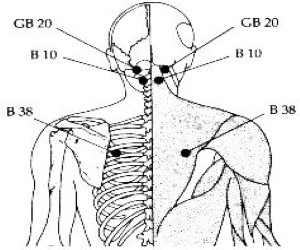
Or massage the points in circles for eight minutes, three times daily, breathing deeply as you go. People use this point for:
- Sore throats
- Stress
- Overexertion
- Burnout
- Heaviness in the head
- Thyroid
Acupressure Point on the Soles of Your Feet:
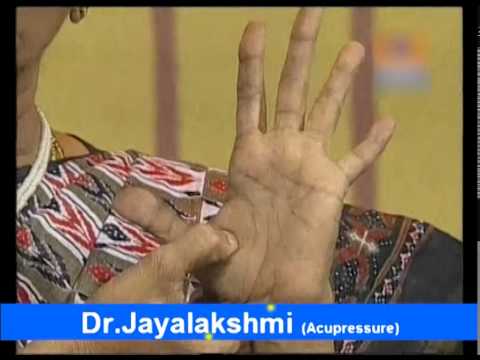
Another good acupressure point for thyroid disorders is on the soles of your feet, near the big toe. Press with your finger for up to two minutes. A golf ball works well too. Roll your feet over it, working the many acupressure points in your feet that are used for all sorts of ailments around the body. It’ll help you relax, and it eases sore feet while you’re at it.
Acupressure is a Super Remedy:
Yoga, exercise, lifestyle changes — whatever you’re doing to support your thyroid, the acupressure points for thyroid disorders here can help balance and stimulate the gland. They get the flow of energy moving and help restore your thyroid gland. Do see a doctor for medical advice before you start any treatment, though. Nothing here is meant as a replacement for your medication. Use it alongside it.
Home Remedies for Thyroid:
When the thyroid doesn’t work properly, all kinds of health issues can follow. The gland can cause a Goiter, Graves’ disease, hyperthyroidism, or hypothyroidism. These butterfly-shaped glands sit over the windpipe, at the base of your neck, and they make the hormones that regulate your metabolism and plenty of other body processes.
Make too much hormone or too little, and the effect on the body is big. The brain controls the thyroid through the pituitary gland, which makes a thyroid-stimulating hormone (TSH). That gland tells the thyroid to pull iodine from the bloodstream and convert it. The thyroid is the only tissue in the body that uses it.
You only need a small amount to make the T3 or T4 hormone, but a deficiency can lead to an overgrowth called a goiter. Thyroid disorders turn up more often in women than in men, and in most cases the female sex hormone triggers the problem. Stress can cause it too, and it can happen at any age.
A thyroid problem can be hard to spot. It comes in two types, hyperthyroidism and hypothyroidism. So how do you test for it, and what should you look for? Let’s go through the answers, plus some natural home remedies for thyroid treatment.
Hyperthyroidism and Hypothyroidism:
Hyperthyroidism is common, and Graves’s disease is the most common form of it. The gland makes too much hormone, and your metabolism speeds up. You might feel on edge most of the time. Nervousness, insomnia, hand tremors, and a bigger appetite are all on the list.
You can even gain weight while the thyroid produces too much TSH. Hypothyroidism is known as myxoedema, and it’s a risk when babies are born with it. It can cause mental retardation and abnormal growth. Treat it with a thyroid hormone within the first few weeks and that can be prevented. The child has to stay on the medication for life, though.
Hashimoto’s is another common one. The gland gets inflamed and swells, and your thyroid ends up underactive. Treating hyperthyroidism can even leave you with hypothyroidism. Weight gain, constipation, and fatigue are the symptoms you’ll hear about most.
Is Thyroid Cancer?
Yes and no. The thyroid gland can cause all sorts of health issues, and cancer can develop in its cells. The thyroid regulates blood pressure, weight, heart rate, and body temperature. The good news is that thyroid cancer is often treatable when it is found early, which is why testing matters.
Symptoms of Thyroid Cancer
Early on, it causes no symptoms at all. As thyroid cancer grows, it can cause:
- Difficulty swallowing
- Pain in the neck or throat
- Your voice changes and turns hoarse
- Swollen lymph nodes
If you notice any of these, book an appointment with your doctor. There’s no good reason to sit on it and not find out what’s causing them.
Can Thyroid Cancer Spread?
When cancer develops, the glands undergo mutations. The genetic changes let the cells multiply fast, and the cells lose their ability to die. Abnormal thyroid cells build up into a tumor, and it can spread through the body.
Treatment depends on which type you have, and there are five different thyroid cancers:
- Papillary Thyroid Cancer – most often affects people aged 30 to 50
- Follicular Thyroid Cancer – affects people older than 50
- Medullary Thyroid Cancer – could be genetic
- Anaplastic Thyroid Cancer – occurs in adults aged 60 and up
- Thyroid Lymphoma – cancer multiplies and occurs in older adults
And even after treatment, it can come back. Even if you’ve had the thyroid removed.
How Do You Test the Thyroid?
Your doctor will start by feeling the thyroid gland for enlargements or nodules, and may send you to an endocrinologist for specific tests. Those include blood tests to measure antibody and hormone levels. Most tests are painless, but one is sensitive. It’s the standard test for hypothyroidism, and it measures the thyroid-stimulating hormone in the pituitary gland. An ultrasound or a biopsy can pick up abnormalities too.
Are Thyroid Nodules Painful?
Most nodules cause no symptoms, but now and then someone notices a lump in the neck. People with thyroid nodules sometimes get pain in the ear, jaw, or neck. In some cases there’s difficulty breathing and swallowing, or a tickle in the throat.
Medical Treatments for Thyroid
Treatment depends on the disorder. With hyperthyroidism, the aim is to bring hormone production down. Your doctor might put you on Propranolol for high blood pressure, or give you an iodine supplement. Surgery is another option, removing all or part of the thyroid.
If your condition isn’t severe, there are home remedies for thyroid you can try instead of the above:
Essential Oils
No change within four weeks? Stop the oil you’re using and try another one. Don’t use too much at once, and use it with other treatments.
Rosemary Oil
Mix four drops of the oil with a tablespoon of coconut oil. Put the mixture on the thyroid acupressure points at the base of the throat, under the feet, or on the lower leg. Massage gently for a couple of minutes. You can also add a few drops to bath water and soak for up to 20 minutes.
Frankincense Oil
Do the same as with Rosemary oil. Mix four drops with coconut oil and apply it to the same acupoints. Or get a food-grade version and take it with food.
Minerals
You can get a low-potency liquid mineral supplement with all nine essential minerals needed to make thyroid hormone. Drinking it daily does you good, but ask your doctor which supplement suits you best. It’s a long-term therapy, and it helps put the minerals back in your body.
Flaxseeds
Take powdered flaxseed and mix one tablespoon into fruit juice or milk. Making your own powder? Use frozen seeds and grind them straight away. Mix it well and drink it up to twice a day.
Virgin Coconut Oil
You can take the oil daily, stirred into your favorite dish or a salad. Cooking with it works too, but non-heated coconut oil works best. Take two tablespoons, twice a day.
Ginger
Chop one inch of ginger finely and steep it in a cup of hot water for up to 10 minutes. Let it cool a little and add honey for flavor. You can drink ginger tea thrice daily.
Bladderwrack
Put two teaspoons of bladderwrack herb in a cup of warm water. Leave it for up to ten minutes, strain it, add honey, and drink. Up to three times daily.
Vitamins
A shortage of Vitamin B12 and Vitamin C can cause hypothyroidism. Vitamin B12 stimulates the thyroid gland, and Vitamin C fights the oxidative stress that makes the condition worse. Think about taking methylated B12 and a food-based vitamin C supplement.
Nettle
Add two teaspoons of nettle tea to a cup of hot water and steep for 10 minutes. Add honey and drink it while it’s warm, three times a day.
So yes, there are natural ways to treat thyroid problems when they aren’t severe. Alongside the methods above, you can eat eggs, fish, meat, fruit like tomatoes, dairy products, and vegetables.
Final Thoughts
Get screened for thyroid problems every five years. That’s the main thing. Stop smoking, and cut the caffeine and alcohol. Keep your stress down, drink filtered water, and skip deep-fried food in favor of iodine-rich foods. Watch your weight, exercise regularly, and do yoga. We hope this raises your awareness of thyroid disorders, and reminds you they aren’t always cancerous.
Medically reviewed by Dr. Jian Times
Last updated: October 22, 2026